

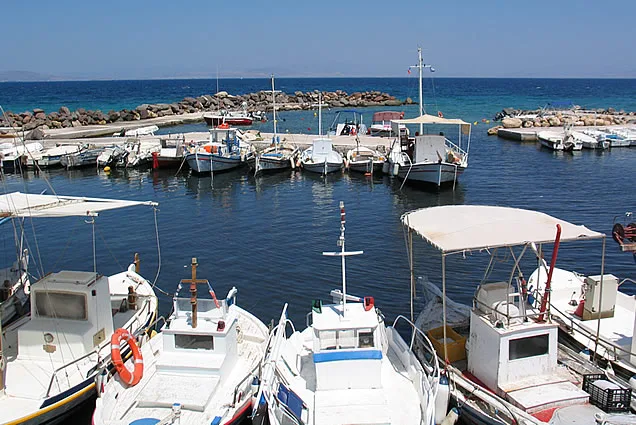
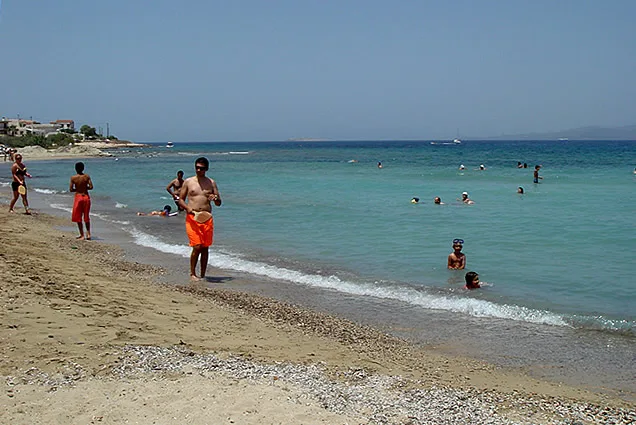
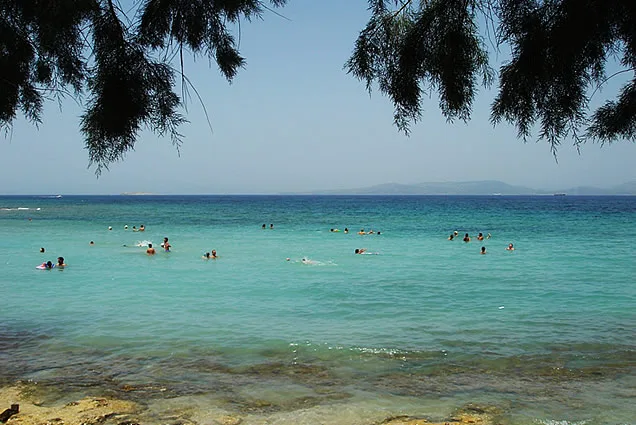
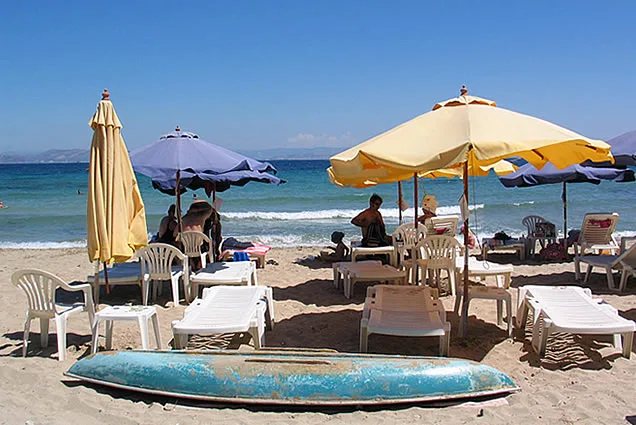
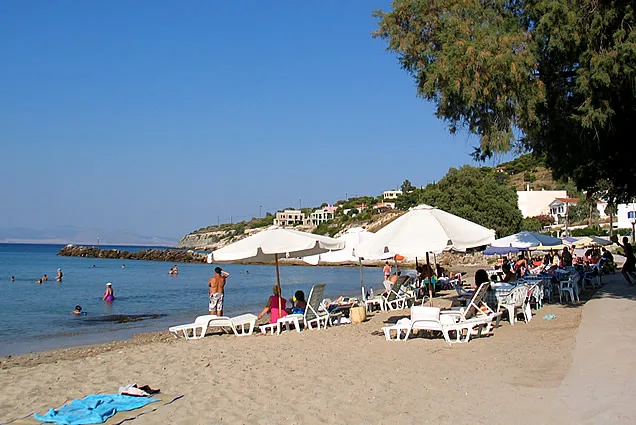
Vagia is a small village on the northeastern edge of the island, with hills covered in pine forest. It has a picturesque little harbor with many small, colorful fishing boats — next to it, a large sandy beach on the left and a smaller one on the right. From late May through mid-September, the two tavernas on the beach offer free sun loungers and umbrellas to their customers.
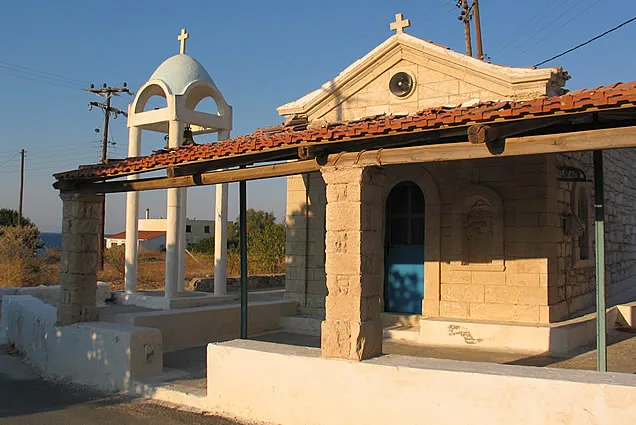
Archaeological finds show that Vagia has been inhabited since antiquity. The village has no real center, but locals consider the small chapel of Agia Paraskevi and Agios Sotiras — at the crossroads toward the main beach and the Tourlos area — to be its heart. Today the area is home to a Greek naval base; during World War II it was occupied by German forces.





How to get there
You can reach the village via the road from Souvala, via the road through Mesagros, or by driving down from Agia Marina. A bus line connects Vagia with Souvala and Aegina Town.
Wetland
Next to the small bridge, at the end of the road leading from Blue Dolphin to the beach, lies a wetland with its own flora and fauna — now a protected area, along with two other wetlands on the island (Vlychada, Marathonas).
Beaches
Vagia's main sandy beach is one of the most relaxing on the island — small, quiet (except in August), with another hidden beach on the right side of the harbor, and several more small sandy or rocky spots to the west.
Zorz Sarri
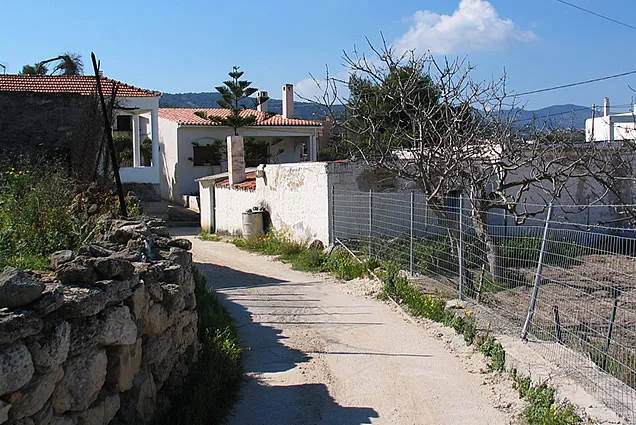
One of the most important modern Greek writers of children's literature. Her first novel, "The Treasure of Vagia," is set in the post-war period and based on real events involving buried money and German mines in the area. Her fifth book, "The Tight Shoes," takes place in the Vagia of the 1930s, where Sarri spent her childhood summers — the house where she stayed (now abandoned) still stands in the village.
Read more →